Corporate Branding Through Events: Strategies for Business Growth
September 04, 2026 | Written by Max Events
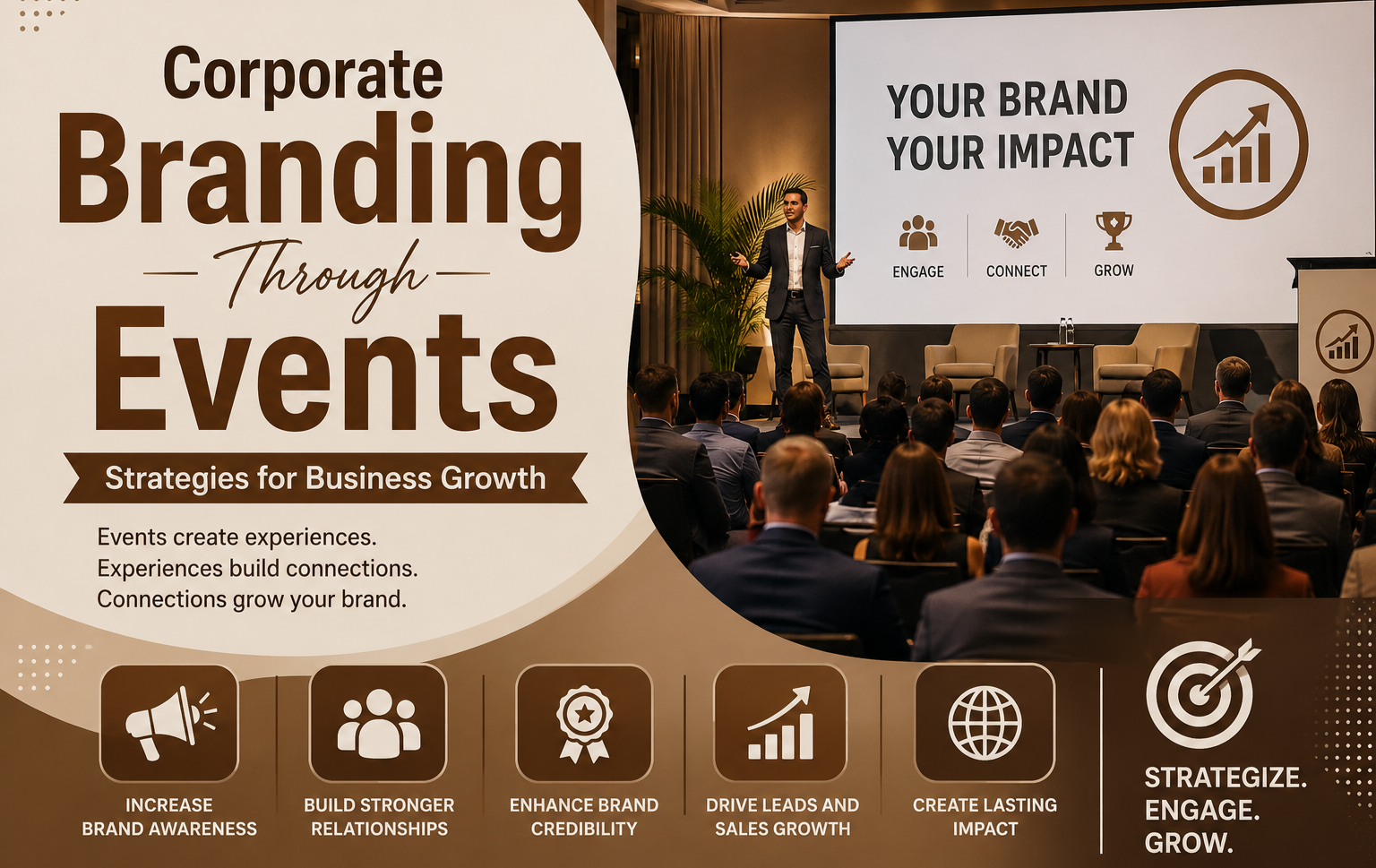
Introduction: Why Corporate Events Matter in Modern Branding
In a competitive business environment, a strong brand is about more than a logo, tagline, or advertising campaign. It is about creating experiences that people remember and associate with your business.
This is where corporate events can become a powerful branding tool.
Whether it is a product launch, industry conference, employee gathering, networking event, exhibition, or award ceremony, a well-planned event gives businesses an opportunity to bring their brand to life. Every detail from the venue and stage design to presentations, guest interactions, entertainment, and digital experiences can communicate what the company stands for.
For businesses looking to strengthen brand awareness, build relationships, generate leads, or improve employee engagement, corporate events offer something traditional advertising often cannot: direct, meaningful interaction with the audience.
With the right strategy, a corporate event is not simply an occasion on the calendar. It becomes a memorable brand experience that can contribute directly to business growth.
What Is Corporate Branding Through Events?
Corporate branding through events means using live experiences to communicate a company's identity, values, vision, and positioning to its target audience.
Instead of simply telling people what your brand represents, an event allows them to experience it.
For example, a technology company launching an innovative product can use interactive demonstrations, immersive displays, digital technology, and expert presentations to communicate innovation. Similarly, a company that values its people can use employee events, recognition ceremonies, and team-building experiences to reinforce its workplace culture.
The key is consistency. The event's theme, visual identity, communication, entertainment, technology, and guest experience should all support the same brand message.
When these elements work together, an event can strengthen brand recognition and create stronger emotional connections with customers, employees, partners, and stakeholders.
7 Effective Event Strategies for Business Growth
Start With a Clear Business Objective
Every successful corporate event should begin with a clear purpose.
Are you launching a product? Generating leads? Strengthening client relationships? Building employee engagement? Positioning your company as an industry leader?
Defining the objective before planning begins helps determine everything from the event format and guest list to the content and marketing strategy.
A clear objective also makes it easier to measure the event's success later.
Create Experiences for the Right Audience
A corporate event should never be designed around the idea of appealing to everyone.
Understand who your attendees are and what they expect from the experience.
Clients may value networking and industry insights, while employees may respond better to recognition, entertainment, and team-building activities. Prospective customers may be more interested in product demonstrations and one-to-one interactions.
When the event is designed around the audience, engagement becomes more natural and meaningful.
Build an Integrated Event Marketing Campaign
The event itself is only one part of the marketing opportunity.
Create anticipation before the event through:
- Social media campaigns
- Email invitations
- Teaser videos
- Speaker announcements
- Branded content
- Media outreach
- Registration campaigns
During the event, encourage attendees to share experiences through branded photo opportunities, social content, interactive activities, and digital engagement.
After the event, continue the conversation with thank-you messages, photographs, videos, surveys, follow-up campaigns, and relevant sales communication.
This turns a one-day event into a longer-lasting marketing campaign.
Tell Your Brand Story
People remember stories more easily than corporate statements.
Use the event to communicate your company's journey, purpose, achievements, and vision through presentations, videos, stage design, guest experiences, and speaker sessions.
For example, a company celebrating a major milestone could transform its history into an engaging visual timeline rather than simply displaying a “25 Years” banner.
When the brand story is woven naturally into the event, attendees are more likely to remember the company long after the event ends.
Make the Audience Part of the Experience
Successful events are not just about watching-they are about participating.
Interactive workshops, live demonstrations, Q&A sessions, networking activities, competitions, immersive technology, and audience polls can encourage guests to become active participants.
The more involved people are, the stronger their connection with the event-and consequently with the brand.
This is one of the key principles of experiential marketing: give people something to experience rather than simply something to see.
Invest in Professional Event Production
The quality of an event can directly influence how attendees perceive the brand.
Poor sound, delayed schedules, confusing signage, inadequate lighting, or disorganized guest management can undermine an otherwise strong event concept.
Professional event production brings together:
- Venue management
- Stage and set design
- Audio-visual production
- Lighting
- Branding and décor
- Guest management
- Entertainment
- Technical support
- Event coordination
When these elements work seamlessly, the audience can focus on the experience while the brand makes the right impression.
Measure the Results
An event should not end when the guests leave.
Businesses should evaluate what the event achieved against its original objectives.
Important KPIs can include:
- Number of qualified leads generated
- New business enquiries
- Attendee engagement
- Social media reach and mentions
- Website traffic
- Customer feedback
- Networking connections
- Employee satisfaction
- Media coverage
- Post-event conversions
Measuring these outcomes helps businesses understand what worked, what needs improvement, and how future events can deliver even greater value.
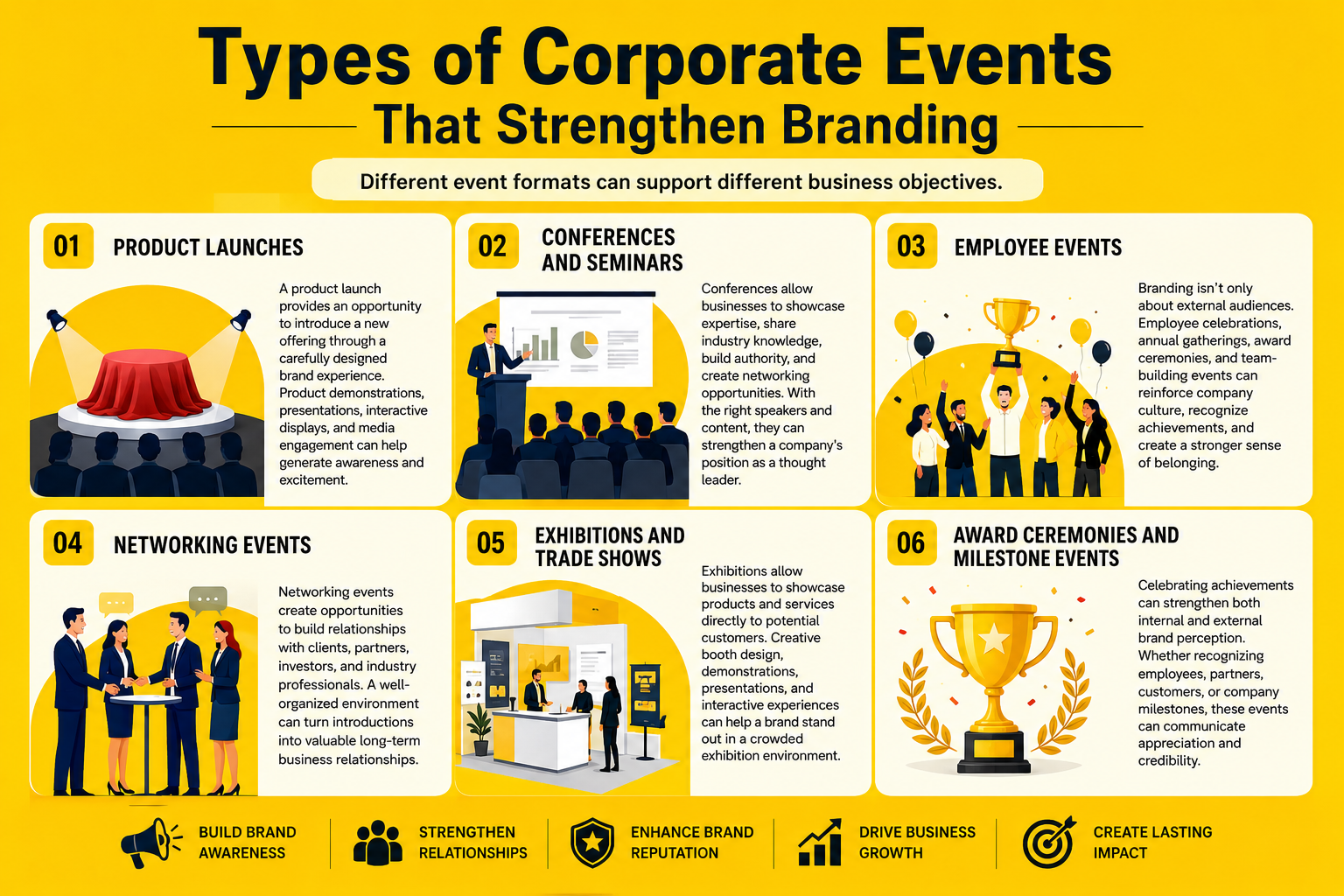
Types of Corporate Events That Strengthen Branding
Different event formats can support different business objectives.
Product Launches
A product launch provides an opportunity to introduce a new offering through a carefully designed brand experience. Product demonstrations, presentations, interactive displays, and media engagement can help generate awareness and excitement.
Conferences and Seminars
Conferences allow businesses to showcase expertise, share industry knowledge, build authority, and create networking opportunities. With the right speakers and content, they can strengthen a company's position as a thought leader.
Employee Events
Branding isn't only about external audiences. Employee celebrations, annual gatherings, award ceremonies, and team-building events can reinforce company culture, recognize achievements, and create a stronger sense of belonging.
Networking Events
Networking events create opportunities to build relationships with clients, partners, investors, and industry professionals. A well-organized environment can turn introductions into valuable long-term business relationships.
Exhibitions and Trade Shows
Exhibitions allow businesses to showcase products and services directly to potential customers. Creative booth design, demonstrations, presentations, and interactive experiences can help a brand stand out in a crowded exhibition environment.
Award Ceremonies and Milestone Events
Celebrating achievements can strengthen both internal and external brand perception. Whether recognizing employees, partners, customers, or company milestones, these events can communicate appreciation and credibility.
How Experiential Marketing Creates Memorable Brand Experiences
One of the biggest advantages of events is their ability to create experiential connections.
Instead of simply seeing an advertisement, attendees interact with the brand. They hear its story, speak with its representatives, experience its environment, and participate in activities.
Technology can make these experiences even more engaging. Interactive displays, LED screens, projection mapping, virtual experiences, live social walls, digital registrations, and immersive installations can all be incorporated into an event when they support the overall objective.
However, technology should never be used simply because it looks impressive.
The best experiences combine creativity, technology, storytelling, and human interaction to create something relevant to the audience.
That is what turns an event into a memorable brand experience.
Measuring the ROI of Corporate Events
One of the biggest questions businesses ask is: Was the event worth the investment?
The answer should be supported by measurable results.
Sales-Focused Events
Businesses can track leads, enquiries, meetings, conversions, and revenue generated.
Branding-Focused Events
Relevant metrics may include social media reach, website traffic, media mentions, audience engagement, brand searches, and attendee feedback.
Employee Events
Businesses can measure participation, satisfaction, internal engagement, and feedback.
The right KPIs depend on the purpose of the event. A successful event is not necessarily the one with the largest attendance-it is the one that achieves its intended business objective.
Why Partner With an Experienced Event Management Company Like Max Events?
Creating a corporate event that delivers both an impressive experience and measurable business value requires more than arranging a venue and coordinating a schedule.
It requires strategy, creativity, production expertise, and attention to detail.
Max Events can help businesses bring their brand vision to life through professionally managed corporate events. From developing the initial concept to coordinating logistics, branding, production, guest experience, and event execution, an experienced team can ensure that every element works towards the same objective.
The right event partner can help businesses:
- Develop creative event concepts
- Align event design with brand identity
- Manage event logistics and production
- Create engaging audience experiences
- Coordinate vendors and technical teams
- Deliver consistent branding across event touchpoints
- Manage the event from planning through execution
- Evaluate outcomes and gather valuable feedback
With the right planning partner, businesses can focus on their guests and objectives while the event team manages the details behind the scenes.
Turn Your Next Event Into a Growth Opportunity
Corporate events have evolved far beyond traditional gatherings. Today, they can serve as powerful platforms for brand building, customer engagement, lead generation, employee connection, and business growth.
The most successful events are those where every element has a purpose-from the first invitation to the final interaction.
By defining clear objectives, understanding the audience, creating memorable experiences, integrating the brand story, and measuring results, businesses can turn corporate events into long-term marketing assets.
And when creativity is combined with professional event management, the possibilities become even greater.
Ready to turn your next corporate event into a memorable brand experience? Partner with Max Events to create an event that connects with your audience, strengthens your brand, and supports your business goals.
Frequently Asked Questions
How can corporate events improve brand awareness?
Corporate events allow businesses to interact directly with their target audience and communicate their brand through visual identity, storytelling, experiences, and personal interaction. This can create stronger brand recall than passive forms of advertising.
What types of corporate events are best for business growth?
Product launches, conferences, exhibitions, networking events, client events, and industry seminars can all contribute to business growth. The best format depends on the company's specific objectives and target audience.
How do you measure the ROI of a corporate event?
Event ROI can be evaluated through metrics such as qualified leads, conversions, revenue, attendee engagement, social media reach, website traffic, customer feedback, and employee satisfaction.
What is experiential marketing in corporate events?
Experiential marketing focuses on creating interactive experiences that allow audiences to actively engage with a brand rather than simply receiving a marketing message.
Why should a business hire a corporate event management company?
An experienced event management company can handle strategy, planning, logistics, production, branding, vendors, technology, and on-site execution, helping businesses deliver a professional and memorable event while reducing the complexity of managing it internally.