Meetings, Incentives, Conferences, and Exhibitions (MICE): Everything You Need to Know
September 16, 2026 | Written by Max Events
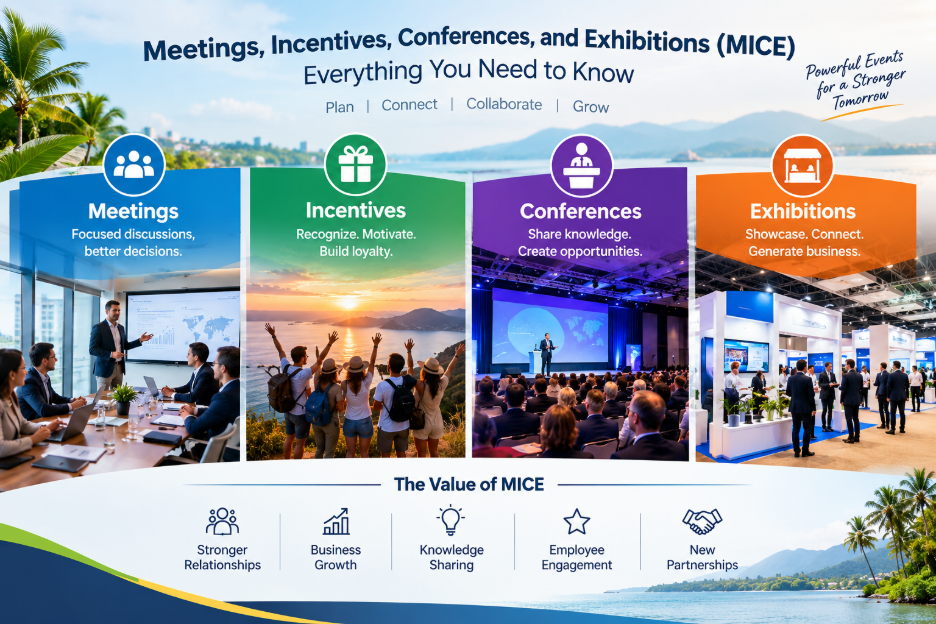
Planning a successful corporate event involves much more than selecting a venue and sending invitations. Meetings, Incentives, Conferences, and Exhibitions (MICE) bring together business professionals, employees, clients, partners, and industry audiences for specific objectives such as communication, networking, learning, recognition, and business growth. With the right planning and execution, MICE events can create measurable value for an organization while delivering a memorable experience for attendees.
What Is MICE and Why Is It Important?
MICE stands for Meetings, Incentives, Conferences, and Exhibitions. It is a specialized segment of business tourism that focuses on organized corporate gatherings rather than individual leisure travel.
A professional MICE company Kerala businesses can rely on helps coordinate everything from event concepts and venue selection to accommodation, transportation, technology, entertainment, and on-site management. The objective is to make sure every part of the event supports the company's goals.
What Are Meetings in MICE?
Meetings are generally smaller corporate gatherings designed around communication, planning, decision-making, or training.
Examples include:
Although meetings may be smaller than conferences or exhibitions, they still require careful planning. Seating arrangements, audiovisual equipment, refreshments, schedules, and venue accessibility can all influence the effectiveness of the gathering.
What Are Incentive Events?
Incentive travel and events are designed to recognize and reward employees, sales teams, business partners, or other high-performing groups.
Companies may organize all-expenses-paid trips, luxury experiences, team activities, cultural programs, or destination-based celebrations. The purpose is not simply entertainment. Incentive programs can improve motivation, strengthen relationships, encourage employee engagement, and reinforce positive performance.
What Are Conferences?
Conferences are larger gatherings focused on knowledge sharing, professional development, networking, and industry communication.
A conference may include:
Successful conferences require detailed agenda management, speaker coordination, registration systems, stage production, audiovisual technology, accommodation planning, and attendee support.
What Are Exhibitions?
Exhibitions and trade shows provide businesses with opportunities to showcase products, services, technologies, and innovations.
Exhibitors use professionally designed booths to attract visitors, demonstrate products, collect leads, communicate with potential customers, and build business relationships. Because exhibitions are highly competitive environments, booth design, visitor experience, branding, lighting, technology, and staff coordination all matter.
What Is the Business Value of MICE Events?
MICE events can generate significant value for both organizations and destinations. Hotels, transportation providers, venues, restaurants, production teams, and local service providers can all benefit from corporate gatherings.
For businesses, the value extends beyond event attendance. A well-planned MICE program can support:
How Do MICE Events Generate Revenue for Hospitality Businesses?
Large corporate events often require accommodation, meeting spaces, catering, transportation, audiovisual equipment, and additional services.
Room blocks can create substantial hotel demand, while conferences and exhibitions may generate additional revenue through food and beverage services, gala dinners, coffee breaks, meeting facilities, and technical requirements.
This makes MICE an important contributor to the broader hospitality and tourism ecosystem.
How Can Businesses Measure MICE ROI?
Counting attendees alone does not provide a complete picture of event success.
Companies can evaluate performance using metrics such as:
Return on Engagement (ROE) is also becoming important because some benefits of a corporate event, such as stronger relationships and improved employee morale, may not immediately appear as direct revenue.
What Technology Is Used in Modern MICE Events?
Technology has transformed the way corporate events are planned and delivered. Modern event organizers can use digital platforms to improve registration, communication, scheduling, networking, accommodation management, and attendee engagement.
How Do RFP and Proposal Tools Help Event Planning?
Request for Proposal (RFP) processes can be managed digitally to collect proposals, compare options, organize requirements, and communicate with venues and service providers.
This can reduce administrative work and make the procurement process more structured.
What Is Room Block Management?
Room block management allows event organizers to coordinate accommodation for groups while giving attendees organized booking options.
For larger conferences and incentive programs, accommodation planning is an important part of the overall attendee experience.
How Are AI, AR, VR, and Hybrid Events Changing MICE?
Emerging technologies are creating new possibilities for corporate events.
AI can support personalized recommendations, networking, attendee communication, and event data analysis. Augmented Reality (AR) and Virtual Reality (VR) can be used for immersive demonstrations and presentations.
Hybrid events combine physical attendance with digital participation, allowing audiences in different locations to participate in selected sessions and activities.
How Should a MICE Event Be Planned Step by Step?
A successful event begins with a clear strategy rather than jumping directly into venue or decoration decisions.
What Should Be Done Before the Event?
The pre-event stage should establish:
Destination selection should consider connectivity, venue facilities, accommodation capacity, safety, accessibility, and the type of experience expected by attendees.
What Happens During On-Ground Execution?
On-site execution requires coordination between multiple teams. Registration, guest arrivals, transportation, accommodation, stage management, technical production, catering, activities, and emergency support need to work together according to the event schedule.
Local Destination Management Company (DMC) support can also help organizers coordinate transportation, cultural activities, excursions, permits, local experiences, and other destination-specific requirements.
What Should Happen After the Event?
Post-event activities are essential for understanding performance.
Organizers can collect attendee feedback, analyze engagement data, review expenses, measure leads and opportunities, and evaluate whether the original objectives were achieved.
Follow-up communication can also help maintain relationships developed during the event.
How Can MICE Events Become More Sustainable?
Sustainability is becoming an increasingly important consideration in corporate event planning.
Event organizers can reduce environmental impact by using:
Sustainable event planning should be practical and aligned with the organization's wider Environmental, Social, and Governance (ESG) objectives.
What Is Slow MICE?
Slow MICE focuses on creating a more balanced and meaningful attendee experience.
Instead of filling every minute with activities, planners can include deliberate networking periods, wellness activities, cultural experiences, breaks, and less rushed schedules.
The goal is to help attendees connect, participate, and absorb the experience without feeling overwhelmed by an overly packed itinerary.
Why Choose Maxevents for MICE Event Planning?
Organizing a corporate gathering requires coordination, creativity, attention to detail, and strong execution. Maxevents, with more than 25 years of experience, provides event planning support designed around the specific objectives and requirements of each event.
From corporate meetings and conferences to exhibitions, incentive programs, and large-scale business gatherings, the planning process can be structured around the audience, destination, budget, schedule, branding, and desired outcomes.
Conclusion
Meetings, Incentives, Conferences, and Exhibitions (MICE) have become an important part of modern corporate communication, business development, employee engagement, and professional networking. Whether the objective is to conduct an important meeting, reward employees, share industry knowledge, or generate exhibition leads, successful results depend on thoughtful planning and professional execution.
For organizations looking for a reliable MICE company Kerala businesses can work with, the focus should be on clear objectives, efficient logistics, engaging experiences, technology, sustainability, and measurable outcomes. With the right event strategy, a corporate gathering can become more than a one-day occasion; it can create lasting business value and stronger professional relationships.
Frequently Asked Questions About MICE
What does MICE stand for in business travel?
MICE stands for Meetings, Incentives, Conferences, and Exhibitions. It represents a specialized segment of group business tourism focused on organized corporate events and business objectives.
What is the difference between MICE and regular business travel?
Regular corporate travel often involves an individual employee traveling for a business purpose. MICE involves coordinated group travel and event logistics, including venues, accommodation, schedules, transportation, activities, and structured business objectives.
What is the role of a DMC in a MICE event?
A Destination Management Company provides local expertise and support. Its responsibilities may include ground transportation, local activities, excursions, permits, cultural experiences, airport transfers, and other destination-related arrangements.
How can a company measure the success of a MICE event?
Companies can measure success through leads generated, sales opportunities, attendee satisfaction, engagement, partnership development, survey results, revenue influenced, and overall event ROI.
What is the Slow MICE trend?
Slow MICE is an event-planning approach that prioritizes attendee wellbeing, meaningful networking, cultural experiences, and a less rushed schedule instead of continuously packed programs.